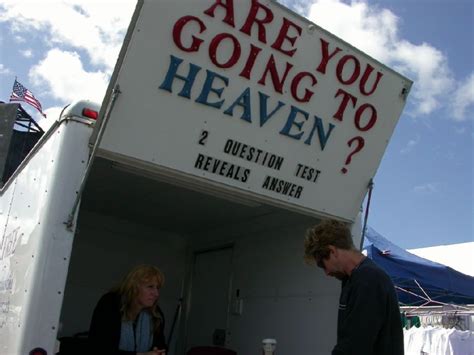
If a family member, or friend, dies and that person were at least a declared believer, why do we moutn to the degree rhar we do? I’m certain to catch a little anger here from some, but the question is honest:As a Christian, I was told all my life that after death, I’d meet relatives, friends, other believers, in Heaven. Meaning, at least to me, that yes, I would see them again. But I’ve never been to a (Christian) funeral where that was stressed in the service. Certainly there was a celebration of that life, but that would be this life, not the next,
Isn’t it supposed to be a good thing when the deceased, known for their faith and good works on earth, should be accepted into the presence of Jesus? I would think so, and I believe Im not the only one that’s either a current or former beliver that would affirm that outcome based on the teachings they’d received as a believer. Is there any direct scriptural reference in the New Testament?
Both Luke and Matthew tell the stony of the thieves on the cross with Jesus and how one, at the very end, is repentant, and hears Jesus says “Truly I say to you: you will be with me in paradise.(Luke 23:39–43; Matthew 27:38–44). What about the most prolific zuthor of the New Testament, Paul. It seems clear to the modern reader that Paul knew nothing of Jesus’ earthy life because he makes no mention of anything thar happened to Jesus, or the aftermath of the crucifixion with the exception of his own conversion(Galatians 1:11-24).
Paul’s letters were written, by best estimates some 30 to 40 years before Matthew or Luke and with his prominence in early scripture, it just seems odd that no one in other books, quote Paul, ever. In fact, Pauls “gospel” is different than other writers of the New Testament. Paul believed that, at any moment, Jesus was going to come out of the clouds, and take all believers away with him. Those that died in Christ, of course, first.(l Thessalonians 4:13-18). Note that according to Paul, Christians did not go directly to heaven upon their death, but rather had fallen asleep, waiting on the return of Christ to see paradise. Since “Paul” wrote almost one half of the New Testament, anyone would think that bu some sort of default, whatever Paul’s take would be paramount, but no, it’s not. Ask a Christian minister of any major denomination as to what happens to believers upon death. I’ll wait.
I don’t think you’ll hear any pastor, preacher, or priest quote Paul in I Thessalonians. In fact, some might try to tie some later scripture with writers in the Old Testament. Early believers did that a lot attempting to not only explain Jesus as the Messiah, bur also his divinity. That Jesus did not immediately return as Paul preached, he was forced to write Ii Thessalonians, some 60 years after his death in Rome (64 CE, reassuring followers thar all was well and the generations thar had pasr were sleeping comfortably in their graves (R.IP.).
The question as to what happens after death is answered quite easily as an Atheist: Nothing. For those that continue to believe that they will continue through eternity, they need to choose their doctrine carefully so that it doesn’t conflict with their ego. Suffice to know, if you’re aChristian, you won’t know based on scripture alone, but interpretation of the same, and as we all know, that can be like a bowl of alphabets.
 Conservative Skeptic
What I do know, is that I do not know if there’s any afterlife at all. The truth is, noone knows. Not me, not the priest, not the imam, not the buddhist, not the scientist, not the gnostic or agnostic, or the atheist.
And anyone who claims they know, I mean they just KNOW what happens after death is only guessing. And their guess is as good as mine. As good as the Pope’s or the late Stephen Hawking. And anyone who insists that their guesswork is the truth, and the only truth, is a liar, a fool, or both, and should be treated as such, not humored and indulged as they presently are, and made to feel that there’s virtue in their arrogance, but openly mocked and ridiculed, and if it hurts their feelings so much the better. Not because I believe in gratuitous insult – I don’t – but I do believe in responding to it in kind, and there is a difference.
LikeLike